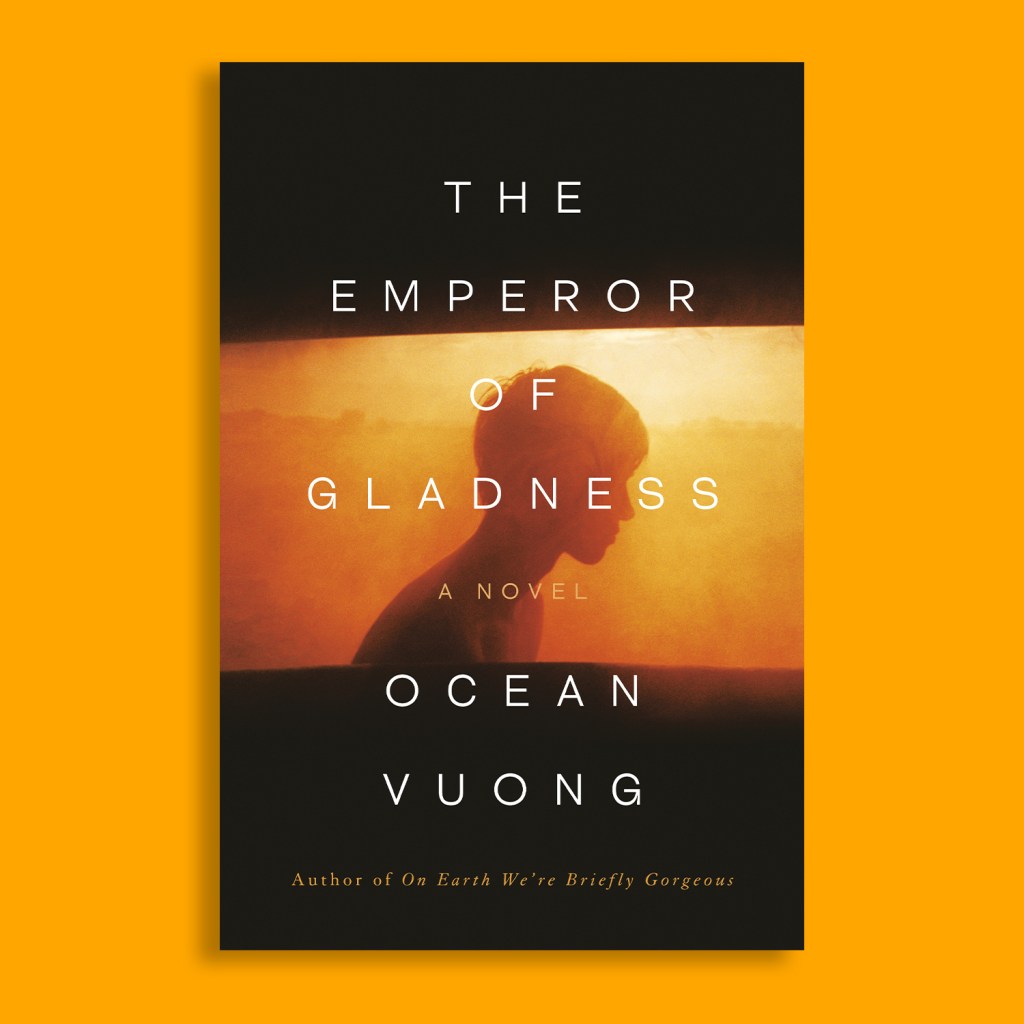
“Because to remember is to fill the present with the past, which meant that the cost of remembering anything, anything at all, is life itself. We murder ourselves, he thought, by remembering”
-Ocean Vuong, The Emperor of Gladness
“The hardest thing in the world is to only live once,” Ocean Vuong writes. These opening lines to his latest novel set the stage for a piece that is beautiful, heart-wrenching, and insightful. Vuong’s words are truly needed in a time fraught with turmoil and uncertainty.
When I picked up this book for the first time, I had no idea what I was getting myself into. I didn’t know that I would turn the last page in complete shambles, desperately wanting to help Hai–the main character–heal from the trauma and losses he encountered throughout his life. Set during the opioid crisis, Hai’s ongoing struggle with addiction is a testament to the hidden battles he–and many others–fight. His story is suggestive of a world in which suffering is masked through consumerism and addiction. This is crucial to consider as consecutive generations are ill-equipped to deal with the pain they may encounter throughout their lives.
One thing that stood out to me when reading this novel was Ocean’s ability to tie the stories of several people together with a common human thread. The novel opens with Hai standing on a bridge, contemplating taking his life. His story is then merged with that of Grazina, an elderly woman struggling with PTSD, who invites Hai into her home. Together, Hai and Grazina embark on a powerful journey of healing.
Throughout it all, Vuong’s masterful command of the English language reigned supreme. I was amazed to discover that English was his second language, and his work is truly nothing short of genius. With his vivid imagery and poetic language, I was transported straight into the mind of a lost soul, searching for some respite from his grief and depression. At times, it felt like I was a guardian: a reader on the sidelines, so invested in the plot but unable to be heard by the main character. I knew nothing of his situation, yet somehow I was able to empathize with his efforts to keep his mother happy (even if it meant lying) and to help his neurodivergent cousin, Sony, free his aunt from jail.
Vuong’s prose invokes communal healing and shows how despite differences in age, race, or gender, there are shared stories which are pivotal to the human experience. These stories must be told, sorted through, and deeply felt. I was not simply reading of Hai’s tale, I was living his life in Grazina’s house by the river. I viscerally felt his heartbreak when he saw his mom sitting in her parlor. I experienced his deep love for his cousin Sony and his overwhelming desire to help others (even if it was at the expense of himself).
This book demonstrates the power of literature. Words have the ability to convey the stories of other people and transmute grief into courageous art. From the opening lines of this novel to the last, I experienced something that was truly divine. For amidst the nihilism of Hai’s tale lies an epicenter of meaning—the power to heal can be found when we rely on one another for support.
 Spilled Ink