I still remember when I read Crime and Punishment for the first time, and discovered newfound empathy for someone who had committed a brutal act, both unacceptable and impermissible by society: murder.
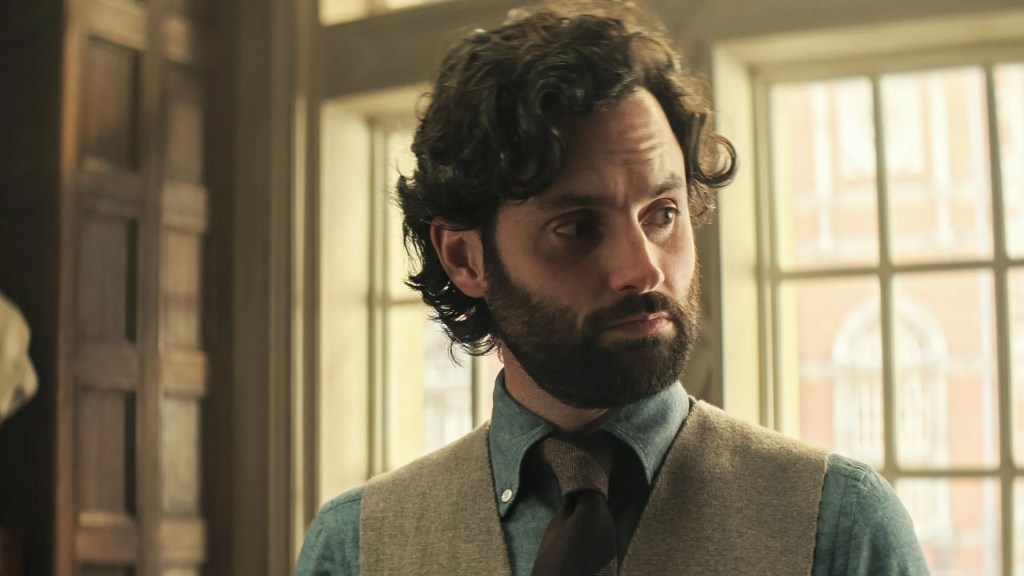
Fast forward on year later, and I sat down to watch YOU, a Netflix original series based on Caroline Kepler’s original novel. It follows Joe Goldberg, a serial killer, as he attempts to reconcile his past trauma with his present desire for love. But no matter how hard he tries, love always seems to escape him. Wrestling with his abandonment issues and desire to protect his family (at any cost), he struggles to truly accept himself for what he is.
There is a point in the show where, just like Raskolnikov from Crime and Punishment, Joe is unable to confront the truth of who he is, and views suicide as the only option. He experiences a split persona between his murdering instinct and good-natured self.
As an observer, I noticed that Joe’s murdering instinct did not originate from a place of hate, but from a need to survive. Growing up in an abusive household, Joe’s father would continuously beat his mother—Joe being her sole protector. Ultimately, Joe was compelled to kill his own father so that he and his mother could live safely.
Joe’s murderous tendencies arise from his inability to come to terms with what he did at a young age. For as long as he can remember, he has struggled with cognitive dissonance between Good and Bad; Love and Murder. His choices and circumstances raise the question of whether someone can do “Bad” things for a subjectively Good cause. When his suicide is unsuccessful, he is forced to embrace part of himself that is a Murderer.
Joe is a typical Anti-hero of the 21st century; a troubled and misunderstood man with a tortured heart, who never received the help or attention that he needed growing up. His dark and somber facade only makes him more intriguing to the women he encounters throughout the show.
His complexity and desire for attention all stem from his belief that he can never be loved because he committed something decidedly immoral. In Crime and Punishment, Raskolnikov, too, believes he is not worthy of love. Still, Sonia holds Raskolnikov in her arms and reassures him that his actions were circumstantial (whether they were is questionable). Still, while reading this scene, I started to cry, because it suggested something rather beautiful about mankind: That each one of us is deserving of unconditional love, no matter what.
While watching YOU, I had one question playing over again and again in my mind: How can we learn to love a murderer? How do we learn to love someone who has done “Bad” things? Because, haven’t we all?
The only way for people like Joe to heal is for them to receive the unconditional acceptance that they were denied in their youth. But there is a stark difference between self-acceptance and feeding the parts of yourself that are violent. Joe makes the mistake of conflating self-forgiveness with embracing his murderous tendencies; what he really needs is the love of the mother who abandoned him. He needs to realize that he is safe and no longer needs to kill to earn love.
Joe’s character is an example of why I am such a firm believer in the Anti-Hero. The Anti-Hero allows us to have empathy for people whose stories are usually cast aside. It portrays the depth and emotional wounds of normal human beings, providing a backstory and basis for man’s nature. Ultimately, it explores why every person–no matter who they are, or what they’ve done–is deserving of divine love.
 Spilled Ink